
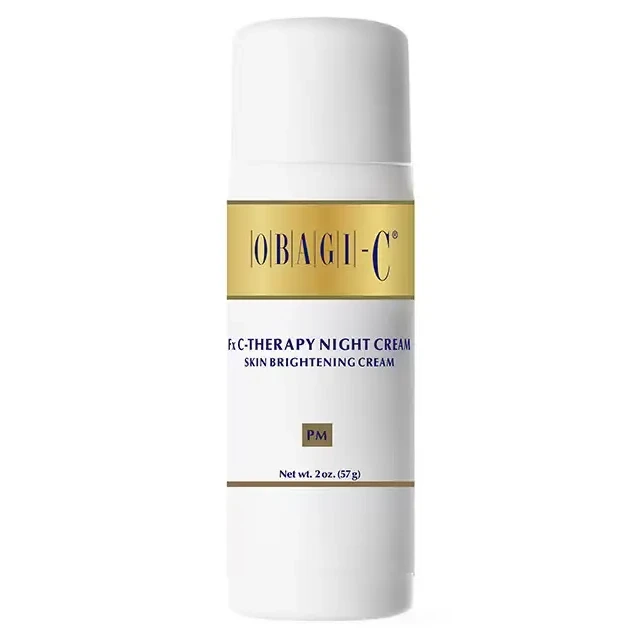
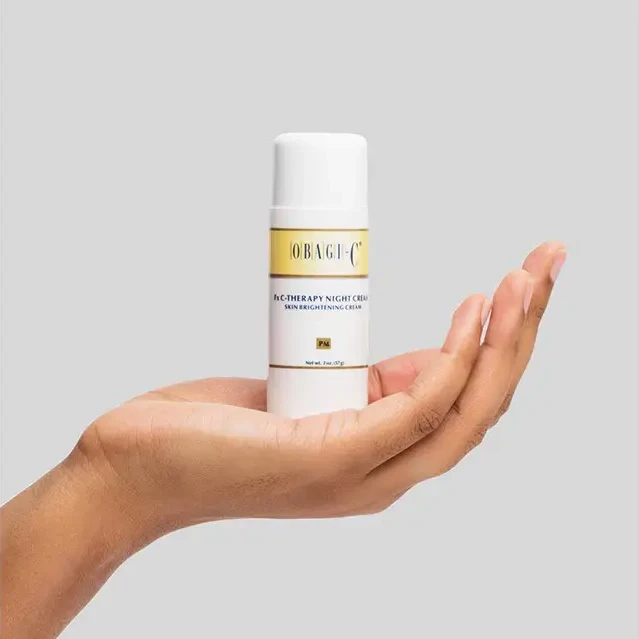
OBAGI C-therapy Night Cream / moisturizing night cream 57 g

OBAGI Medical C-therapy  Night Cream 57g
-20%
OBAGI Medical C-therapy  Night Cream 57g
OBAGI C-therapy Night Cream / moisturizing night cream 57 g
from Save -20%
92.08€
115.00€
Ex Tax: 76.10€

OBAGI C-therapy  Night Cream / moisturizing night cream 57 g


Gradually reduces dark spots with 4% hydroquinone and supplies your skin with vitamins C and E while you sleep.

With Obagi-C Rx you are on the way to healthier, refreshed, revitalised skin.

Obagi-C Rx Systems promote skin renewal from the inside out using a 4% hydroquinone USP formula that reduces the appearance of hyperpigmentation and age spots, combined with 10% L-ascorbic acid (vitamin C) — unique.


Topical antioxidant has been shown to stimulate collagen synthesis and protect your skin, reducing further damage to skin cells.


Composition: HYDROQUINONE 4% A potent inhibitor of melanin production long recognised as the most effective ingredient for reducing and potentially eliminating melasma.


water (aqua), glycerin, cetyl alcohol, PPG-2 myristyl ether propionate, sodium lauryl sulfate, TEA-salicylate, lactic acid, phenyltrimethicone, tocopheryl acetate, sodium metabisulfite, ascorbic acid, methylparaben, disodium EDTA, propylparaben, saponin.


Safety information: People with prior sensitivity or allergic reaction to this product or any of its ingredients should not use it. The safety of topical hydroquinone use during pregnancy or in children (from 12 years of age) has not been established.


Avoid contact with eyes, nose, mouth or lips. In case of accidental contact the patient should rinse the eyes, nose, mouth or lips with water and contact a physician.

Use of sunscreens is an essential aspect of hydroquinone therapy, as even minimal sun exposure maintains melanocyte activity.


Contains sodium metabisulfite, a sulfite that may cause allergic-type reactions, including anaphylactic symptoms and life-threatening or less severe asthma episodes in some sensitive individuals.


The overall prevalence of sulfite sensitivity in the general population is unknown and is likely low. Sensitivity to sulfites is observed more frequently in asthmatic patients than in non-asthmatic individuals.


Nursing mothers: it is not known whether topically applied hydroquinone is absorbed or excreted in human milk. If a nursing mother uses hydroquinone topically, caution should be exercised.


Write a review

Note: HTML is not translated!
Rating
Bad Good
Captcha